13 August 2026 / Port Meadow, Oxford, UK / 51.7717° N, 1.2833° W
Twenty-five minutes of open sky
153 frames × 10 s, ISO 1250, f/2.8, 24 mm eq.
25 min 30 s total shutter
registration 0.26 px median
no foreground — the camera was aimed straight up the Milky Way
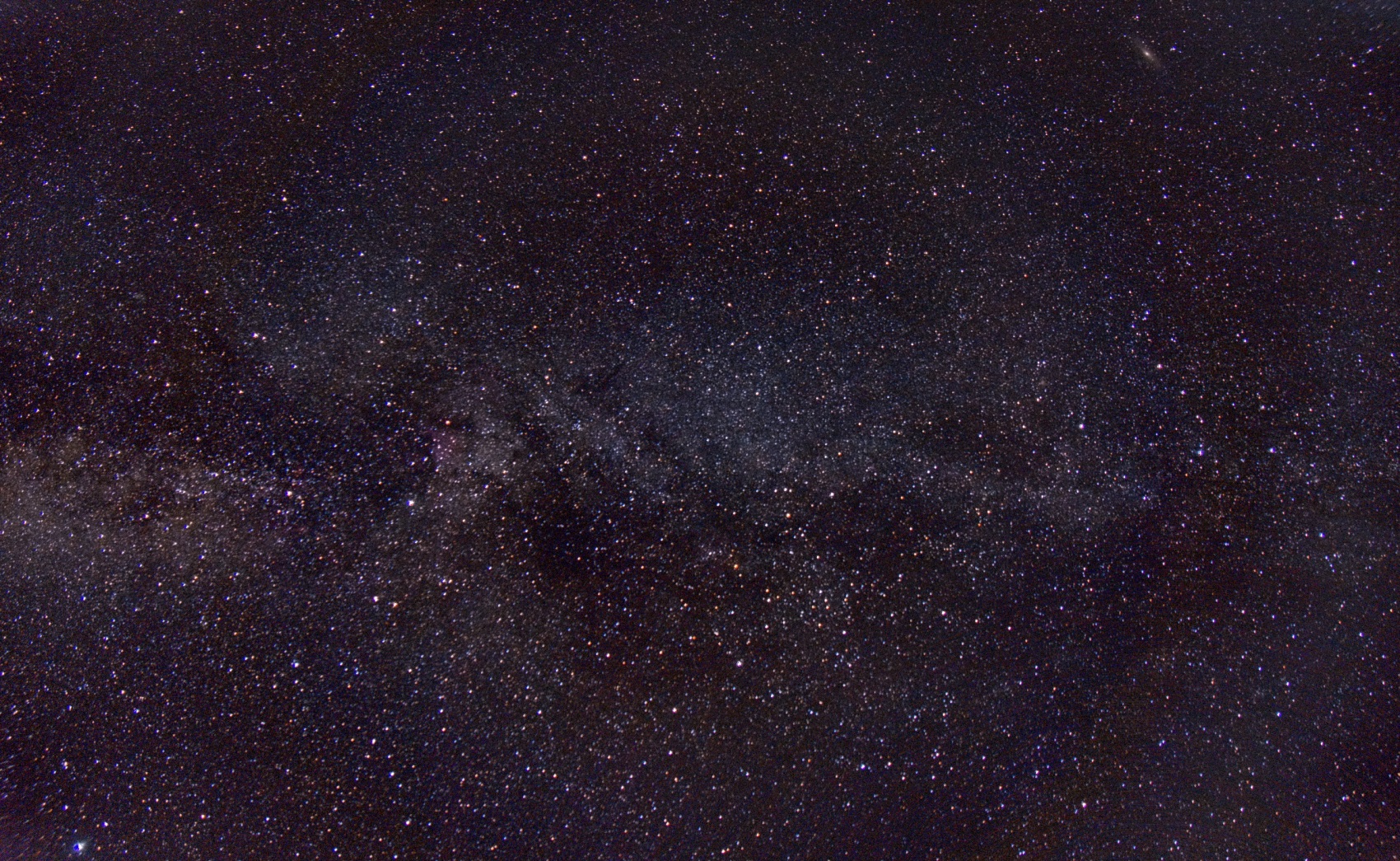
All 153 frames, one image
What the noise was hiding
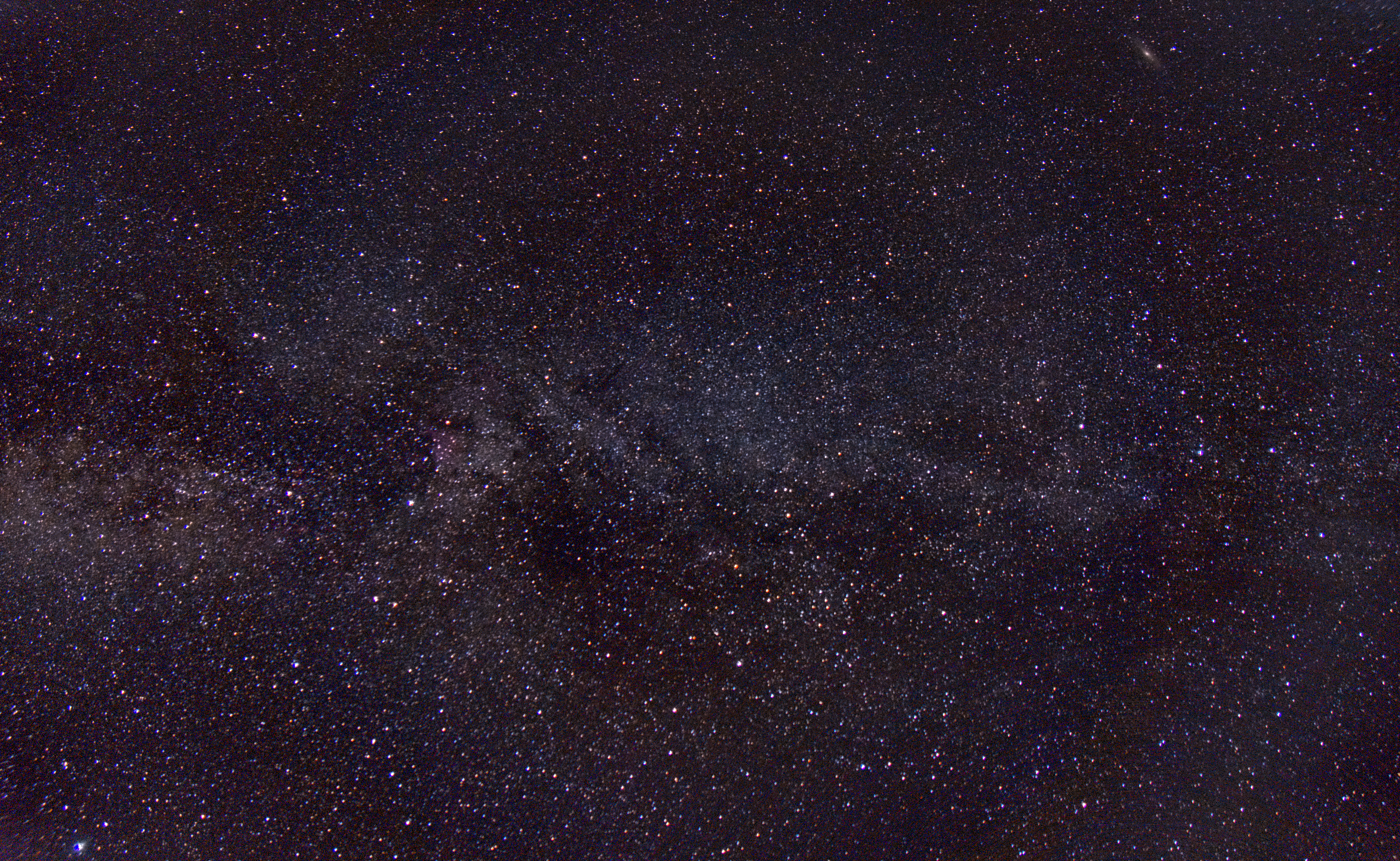
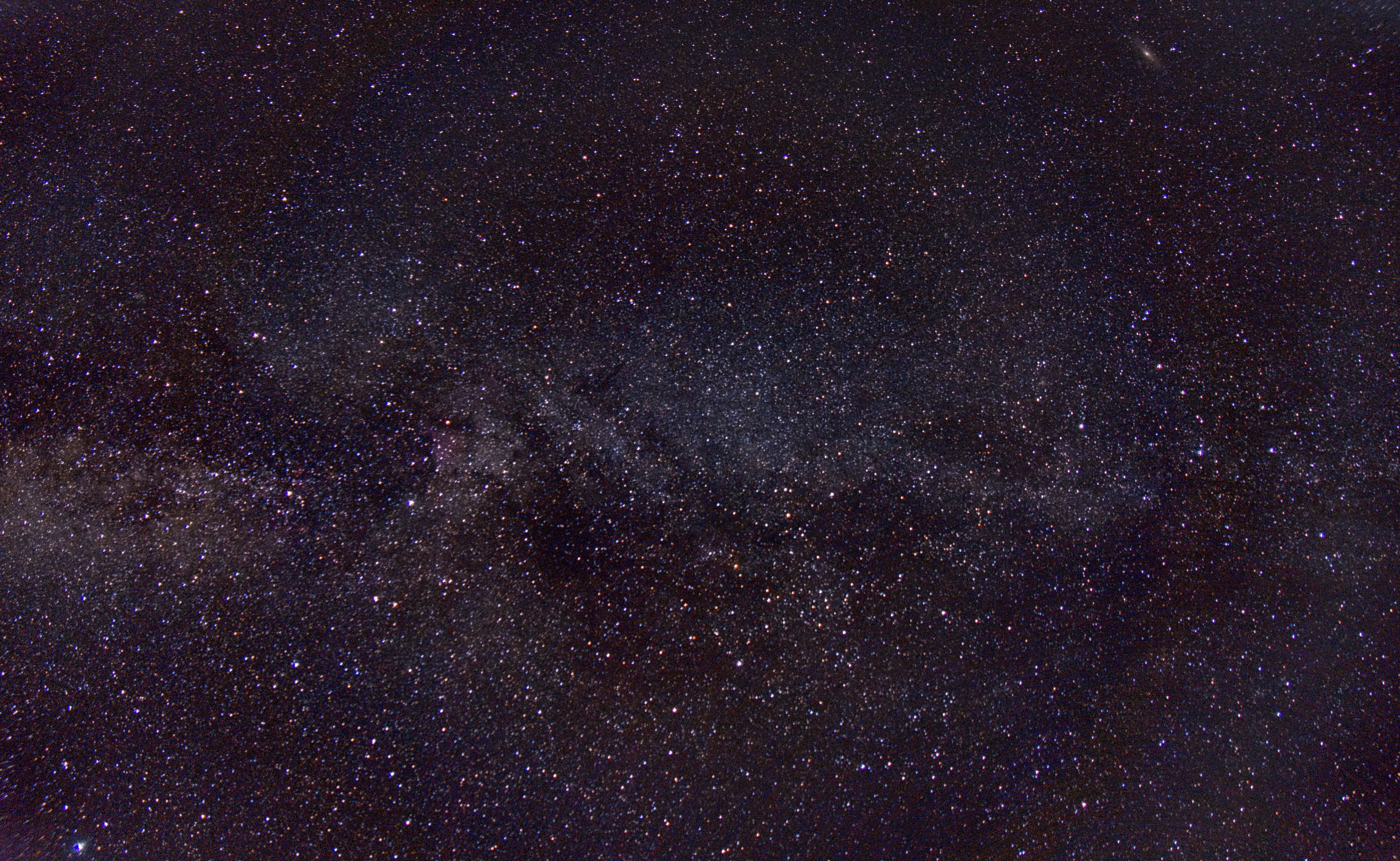
A single frame is a grey rectangle with a few dozen stars in it. Registered on the star field and averaged, the random noise falls away by about twelve times and the sky underneath appears: the Milky Way running edge to edge, the dark dust lane splitting it on the left, and the small elongated smudge near the top right — the Andromeda Galaxy, the furthest thing a person can see without a telescope.
noise ÷12.4 vs one frame
rejected satellites, aircraft, hot pixels
field Cygnus across to Andromeda
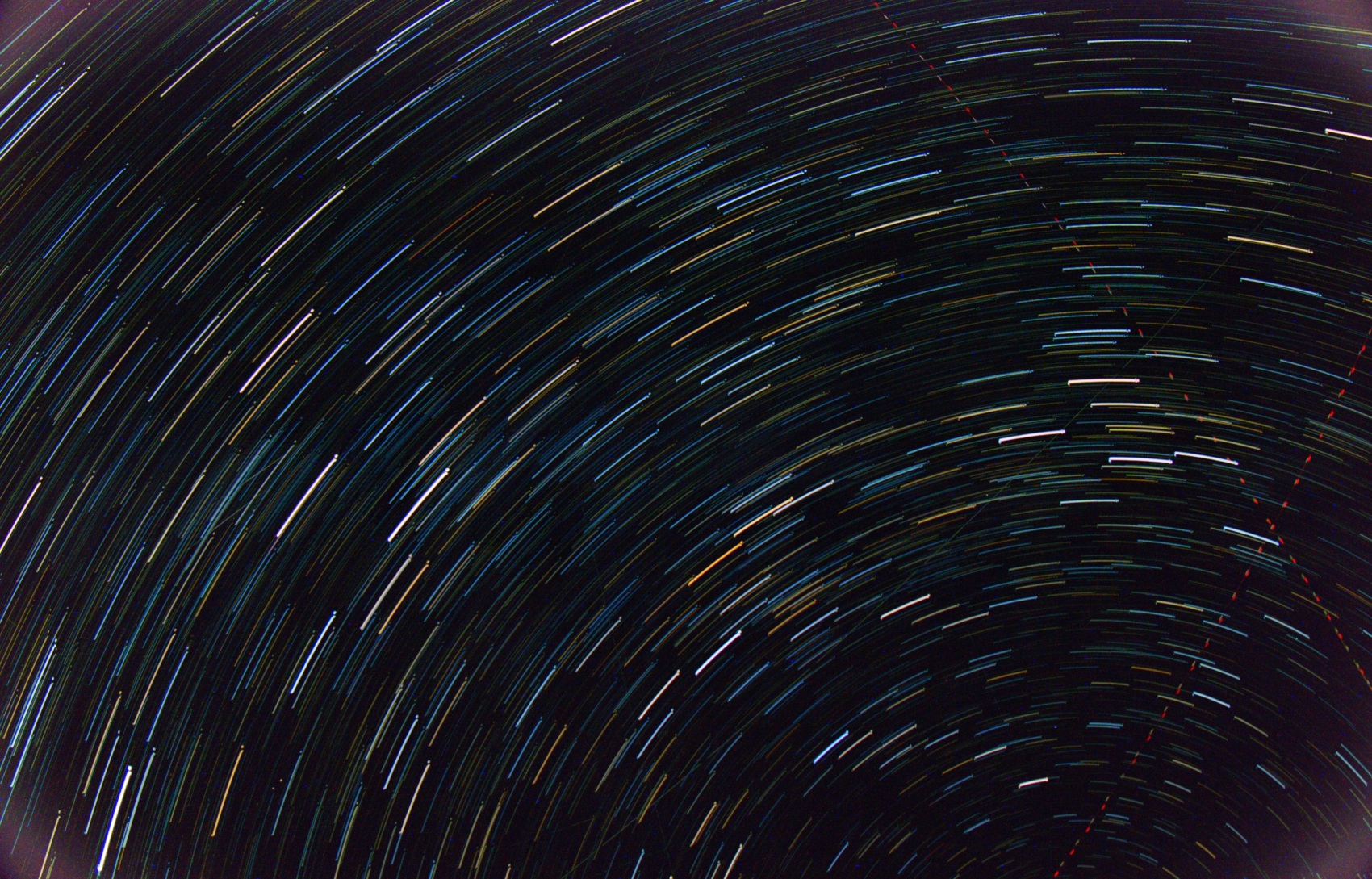
The same 153 frames, not registered
Twenty-five minutes of the Earth turning
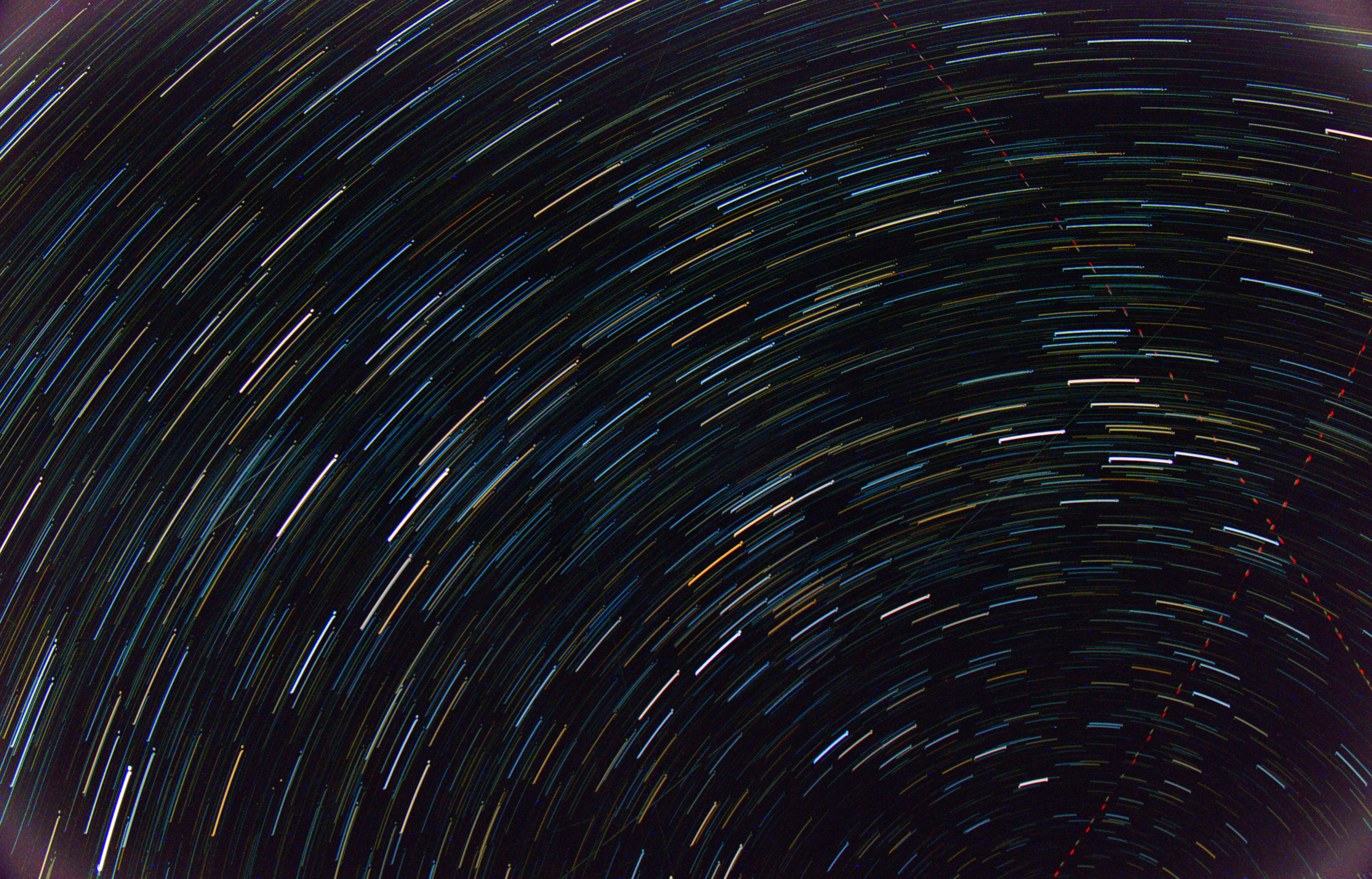
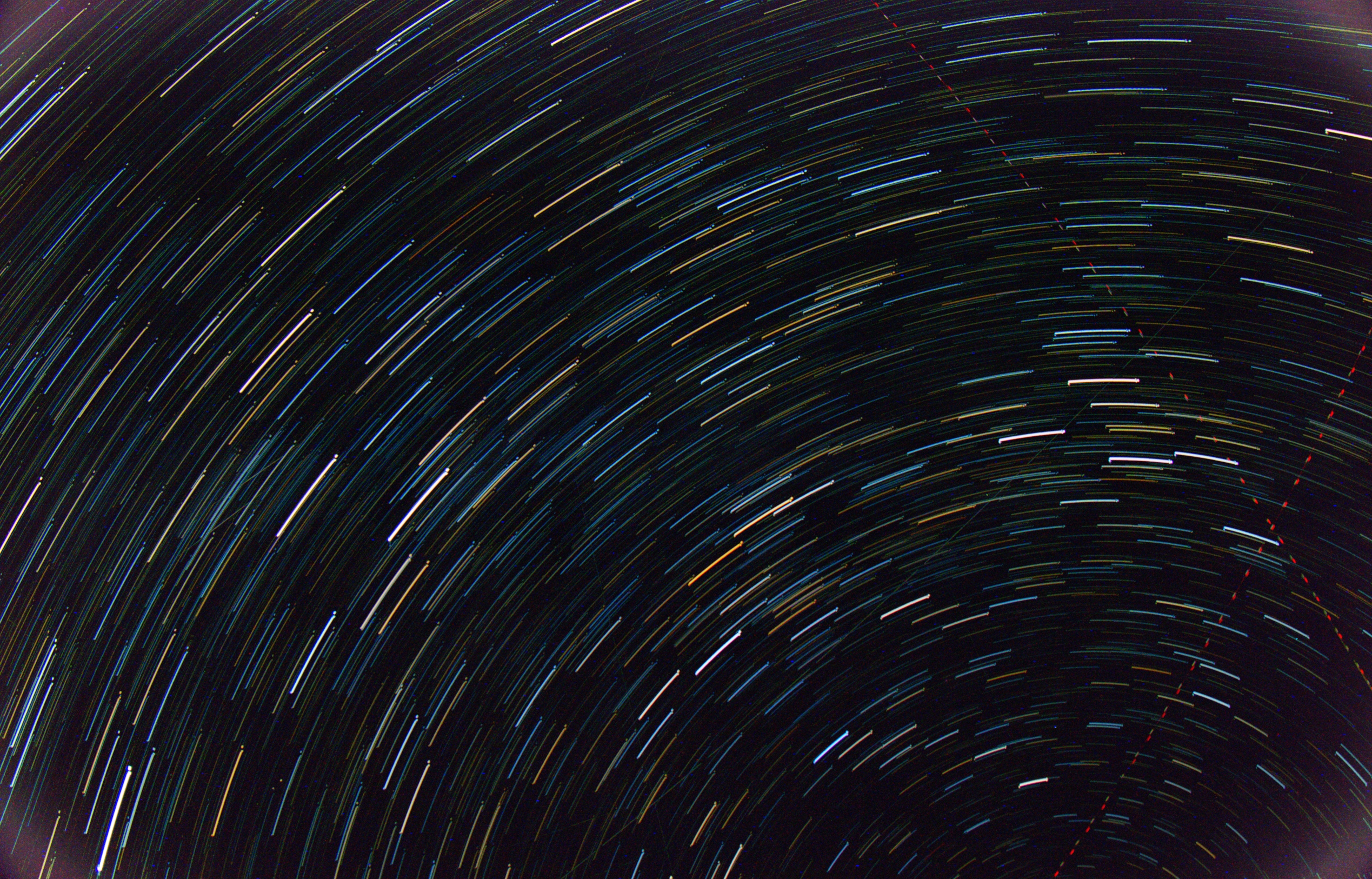
The registration is what holds the stars still; drop it, keep the brightest value each pixel ever reached, and every star draws the arc it actually travelled. Twenty-five minutes buys 6.4° of turn — short enough that these read as dashes rather than the long sweeps of the second night, but long enough that they are visibly concentric, tightening towards a centre just past the right-hand edge.
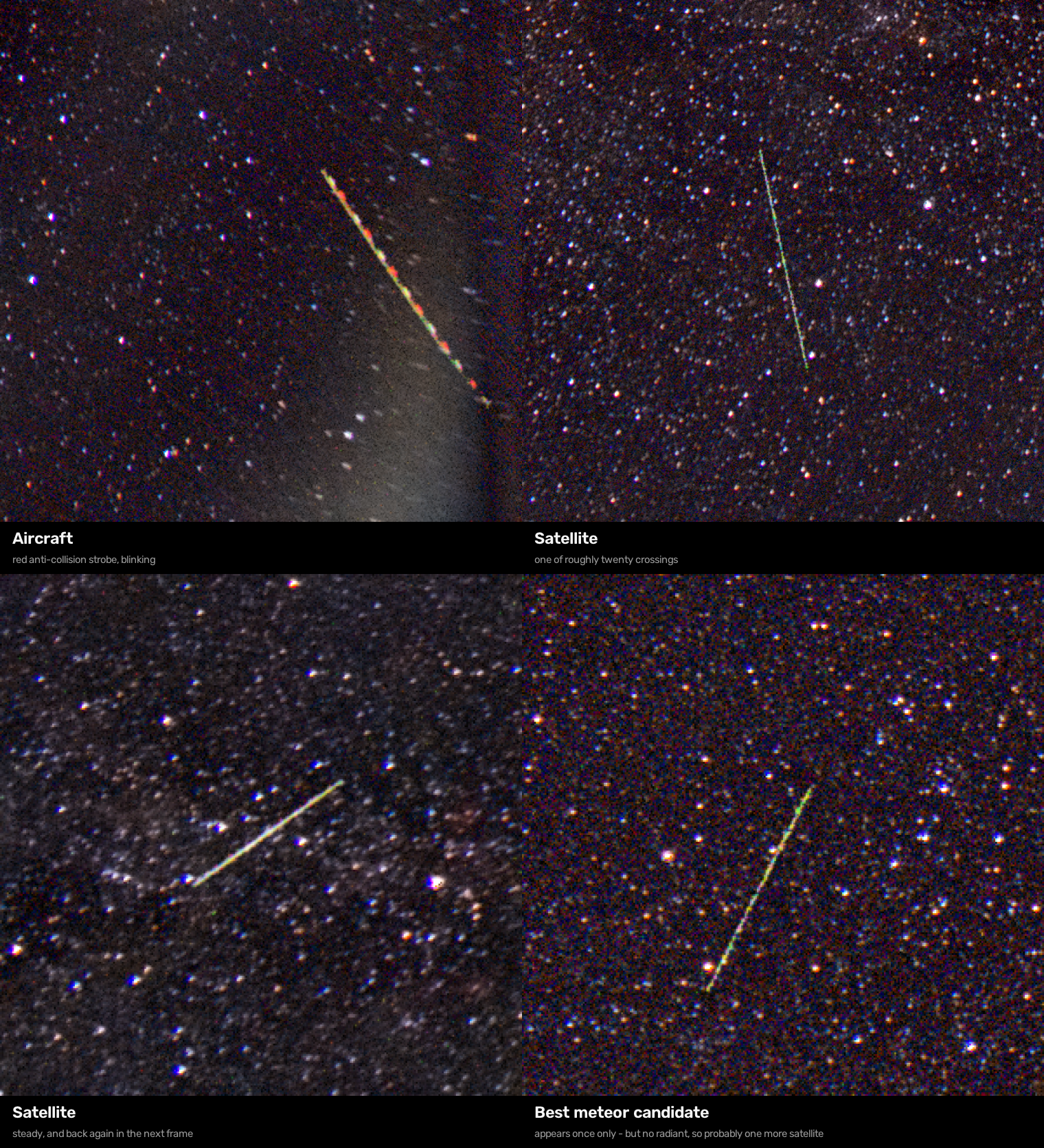
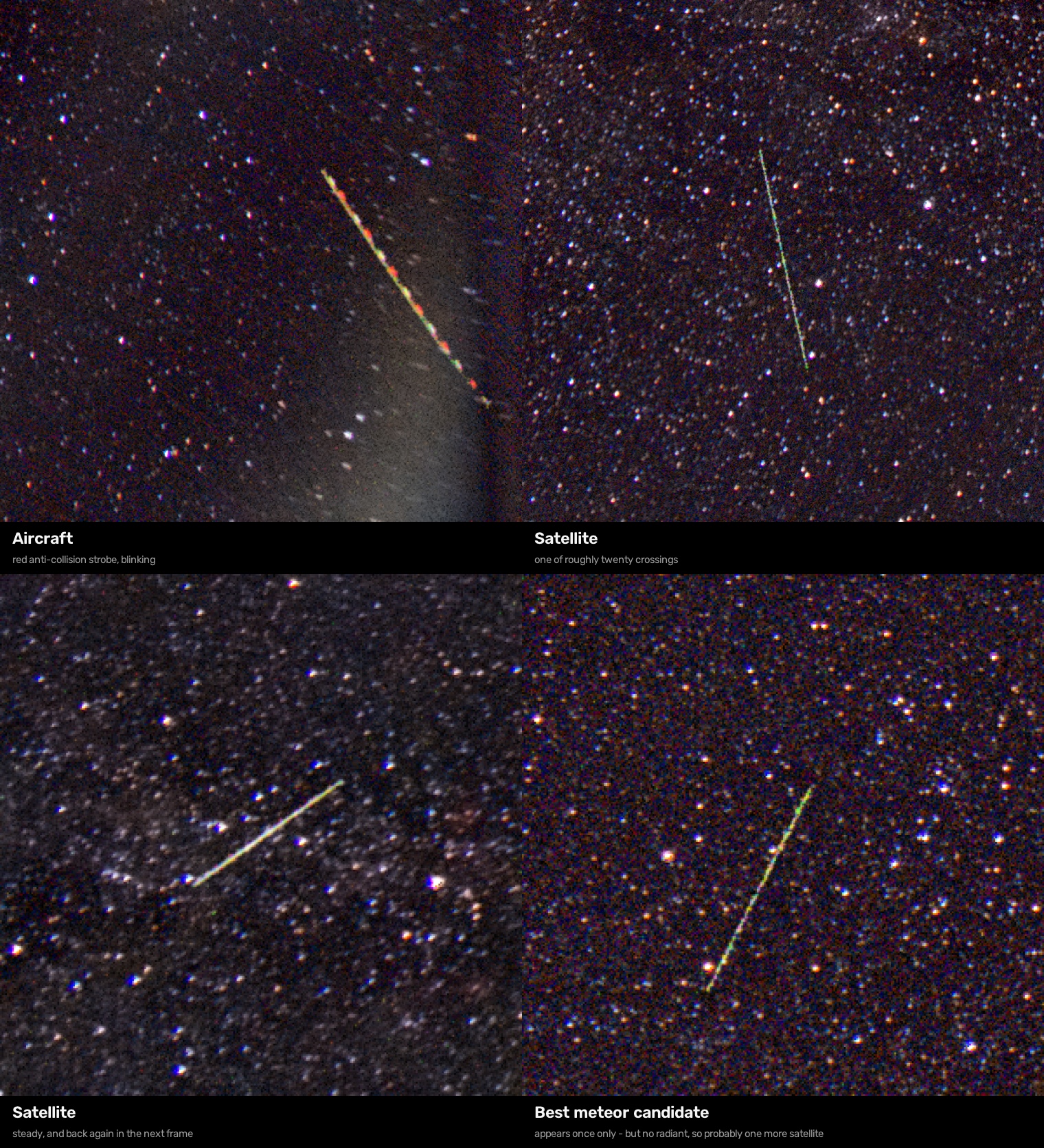
That centre is the celestial pole, and nothing here was told where it is. It falls out of the frames: the sky's motion across the run is one rigid rotation, and the axis of that rotation is the pole. The red dashes running down the right are not a star — that is an aircraft, ticking off its anti-collision strobe frame after frame.
arc length 6.4° of rotation
span 25 min 30 s elapsed
centre the pole, just off-frame
also visible one aircraft, in red
colour real — blue-white hot, amber cool
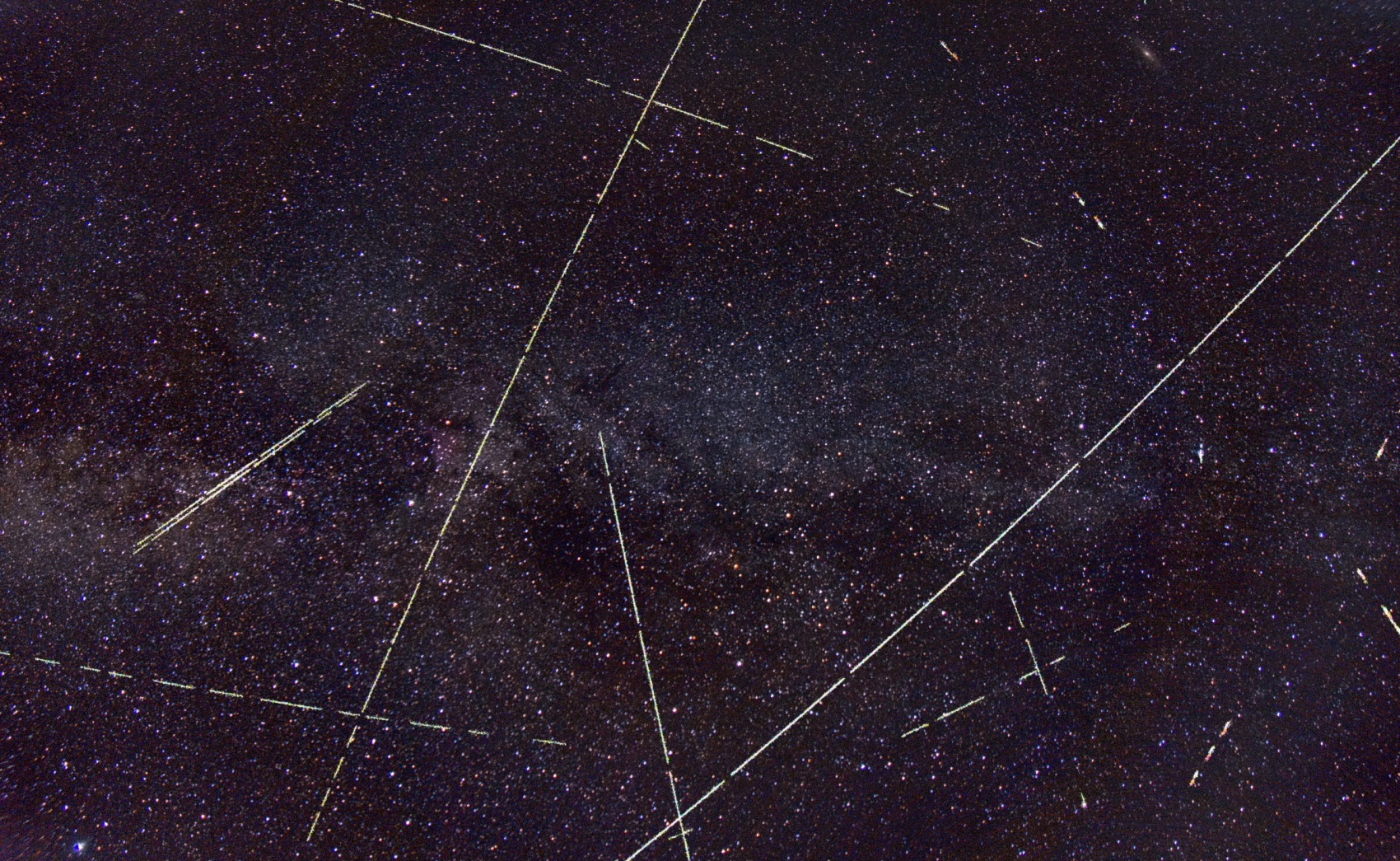
Everything that crossed, all at once
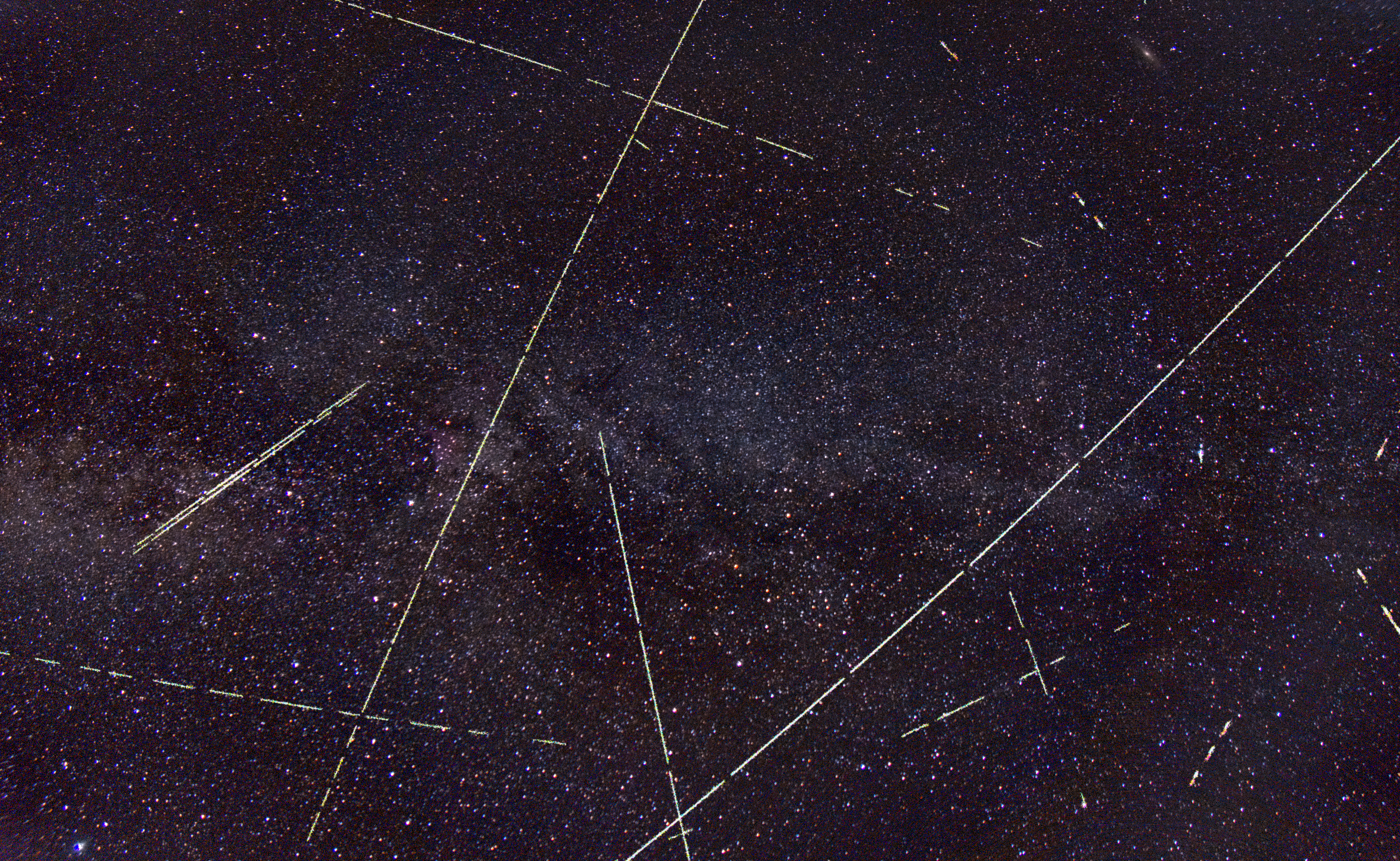
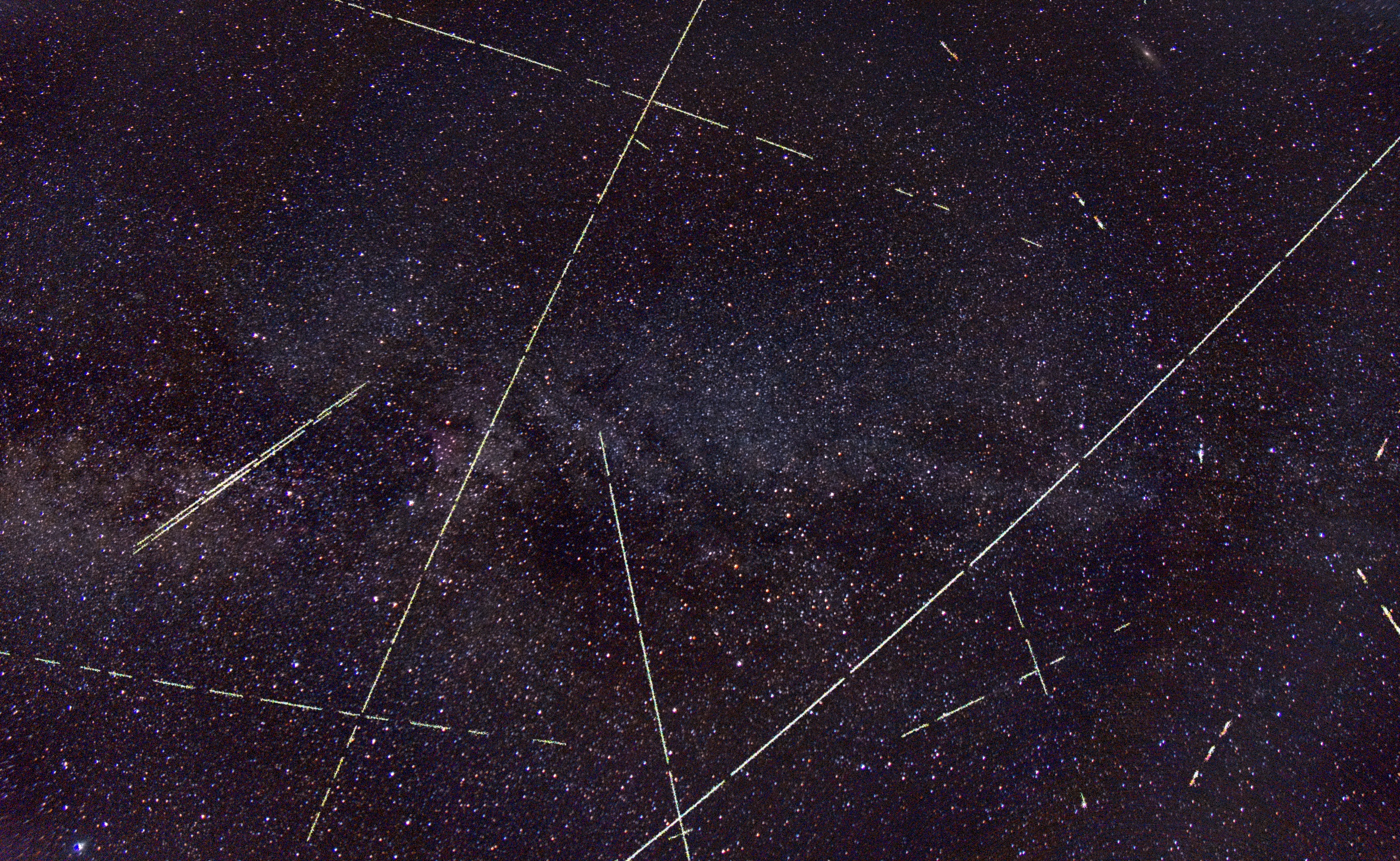
Every trail found in every frame, laid back over the deep stack. The long continuous lines are satellites; the dashed ones are aircraft, given away by their red anti-collision strobes. Several satellites appear in five, seven, nine frames in a row, marching a little further along the same line each time — which is exactly the pattern that reads as the same shooting star in different positions when you flick through the shots.
multi-frame 13 satellites
longest 9 frames ≈ 100 s
aircraft 2, by strobe colour
meteors none confirmed
Originals
Everything, at full size
PNGs are 16-bit and unclipped, so they take an edit better than the JPEGs do. All of it is free to use however you like.
| File | What it is | Download |
|---|---|---|
| 01_milkyway_stack | Deep stack, all 153 frames | PNG 16-bit 19 MB JPEG 3 MB |
| 02_star_trails | Star trails, 6.4 degrees of rotation | PNG 16-bit 22 MB JPEG 2 MB |
| 03_night_traffic | Every detected trail over the deep stack | PNG 16-bit 19 MB JPEG 3 MB |
| 04_timelapse | Timelapse — re-encoded to 1600 px to fit the host's 25 MiB cap | MP4 13 MB |
| 05_what_crossed_the_sky | Labelled close-ups: aircraft, satellites, candidate | PNG 16-bit 11 MB JPEG 1 MB |