16–17 August 2026 / Miradouro do Pontal, Alcoutim, Portugal / 37.4264° N, 7.4555° W
Two thousand kilometres south, for a dark sky
605 frames × 15 s, ISO 1600, f/2.8, 24 mm eq.
2 h 31 m total shutter, 43 min of it clear enough to stack
registration 0.25 px median
aimed straight up, and clouded for a third of the night
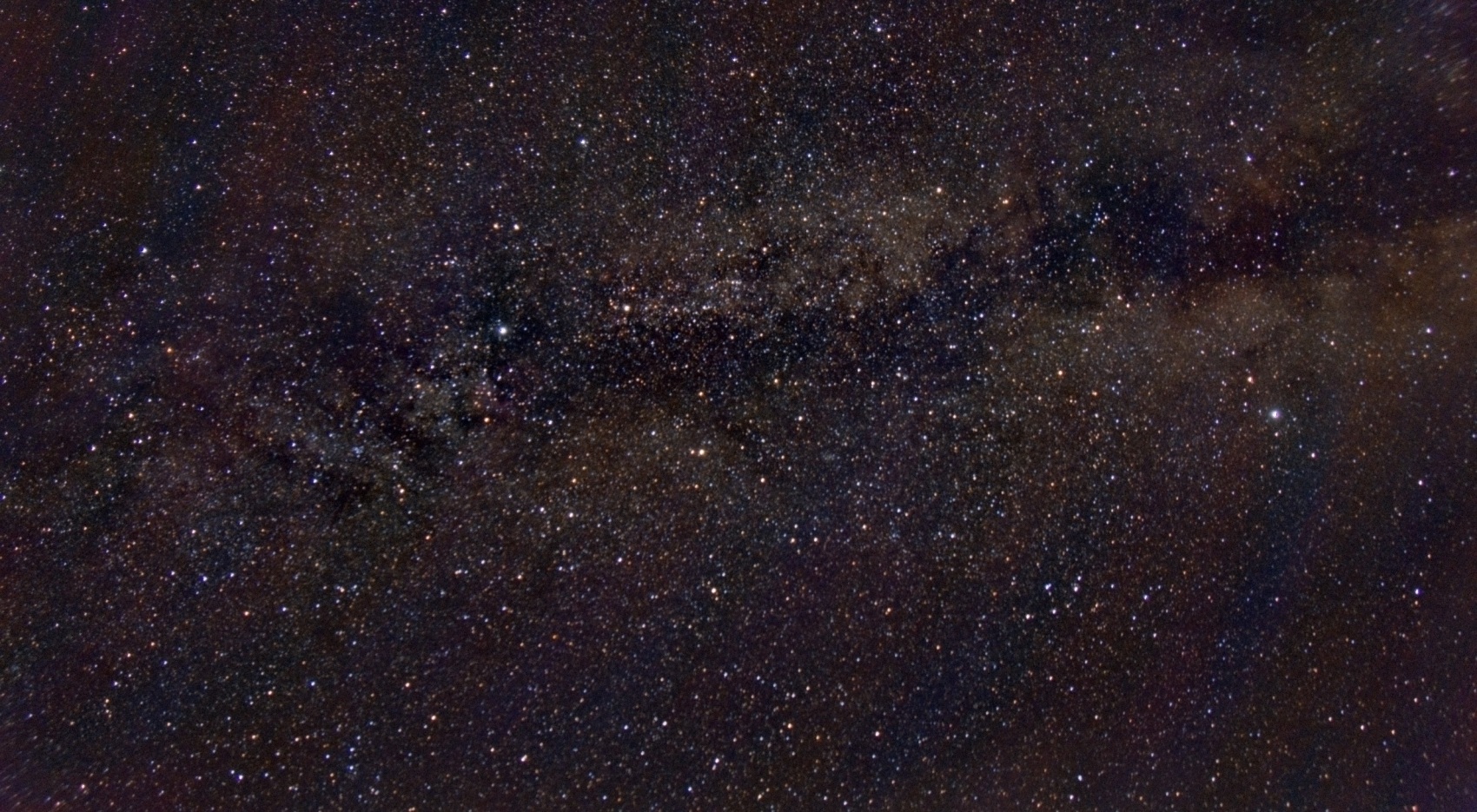
173 consecutive frames, 23:56 to 00:43
The galaxy, finally
Most of this night was cloud. Every frame was scored for it first, by counting the point sources in the middle of the embedded preview — no decoding, no disk, twenty-five seconds for the lot. Cloud turns out to announce itself twice over: it removes stars and it reflects the towns' light back up, so a clouded frame is both emptier and brighter. The two run together at −0.85.
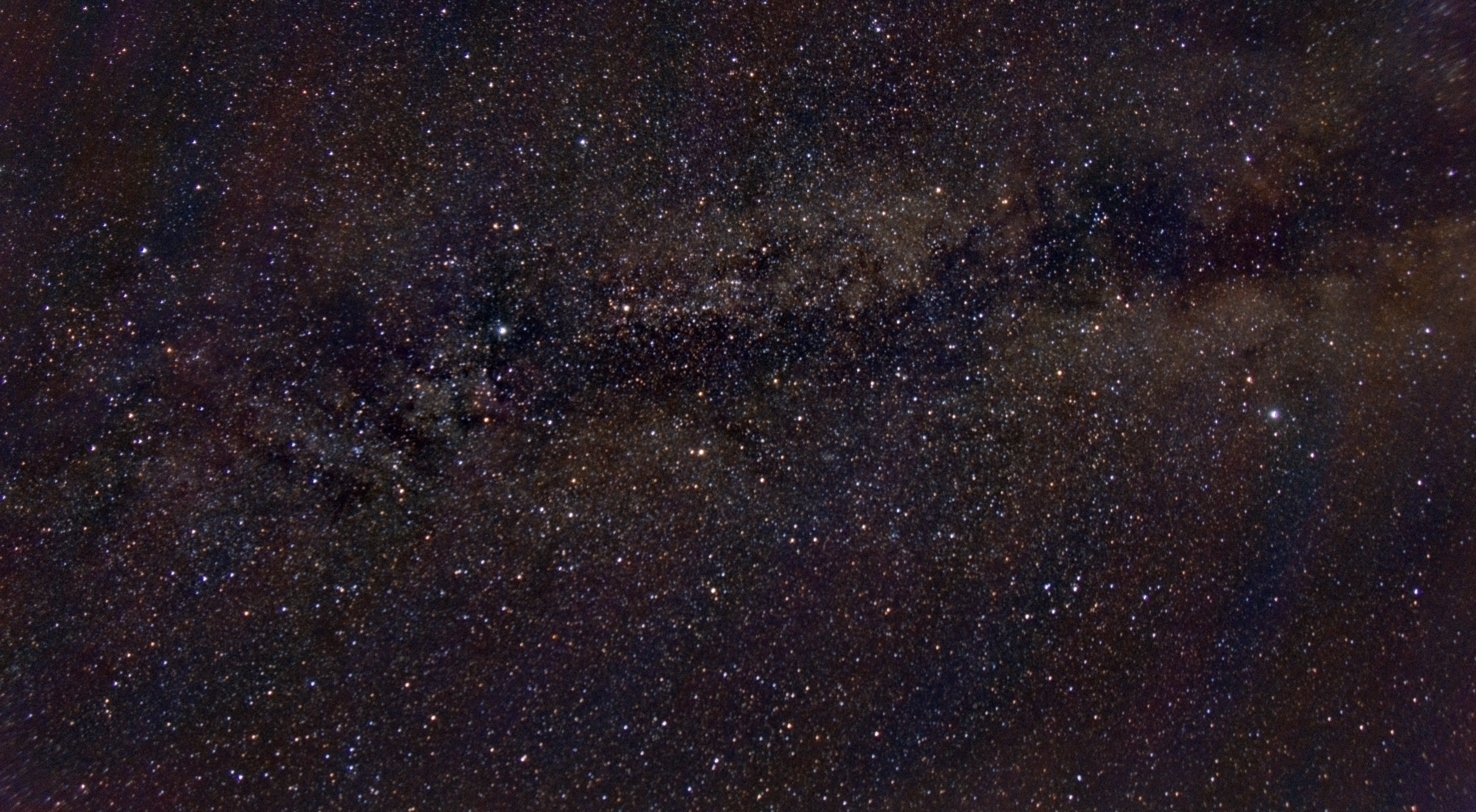
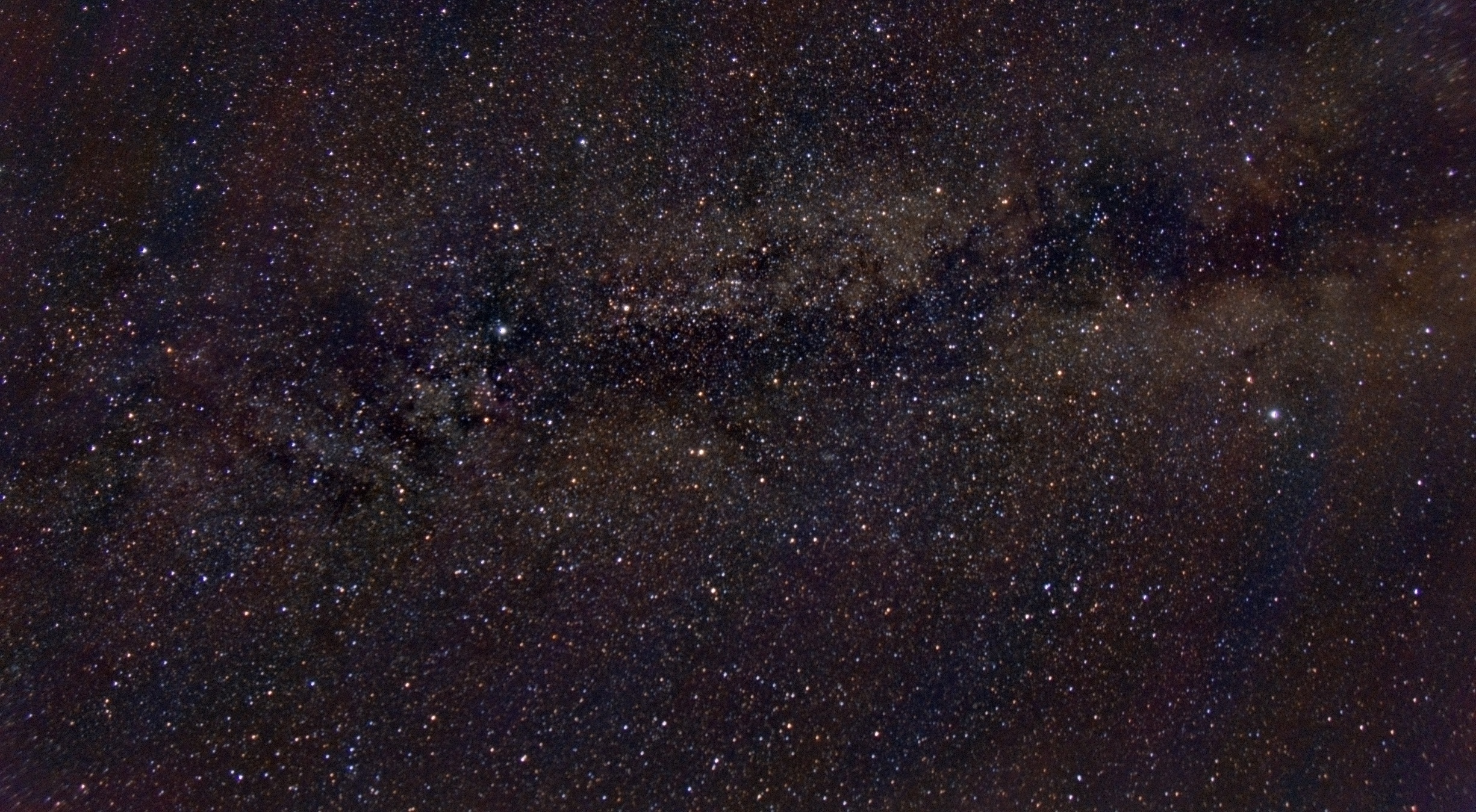
That found one unbroken window of 173 frames with nothing dropped between them, averaging 2,700 stars against 1,600 for the night as a whole. It is 43 minutes of the constellation Cygnus, and the dark lane splitting the band lengthways is the Great Rift — dust in our own spiral arm, in front of everything else.
centre RA 307.3°, Dec +33.7°
galactic l 73.6°, b −3.1°
field 81° × 53°
dropped to cloud 183 of 605
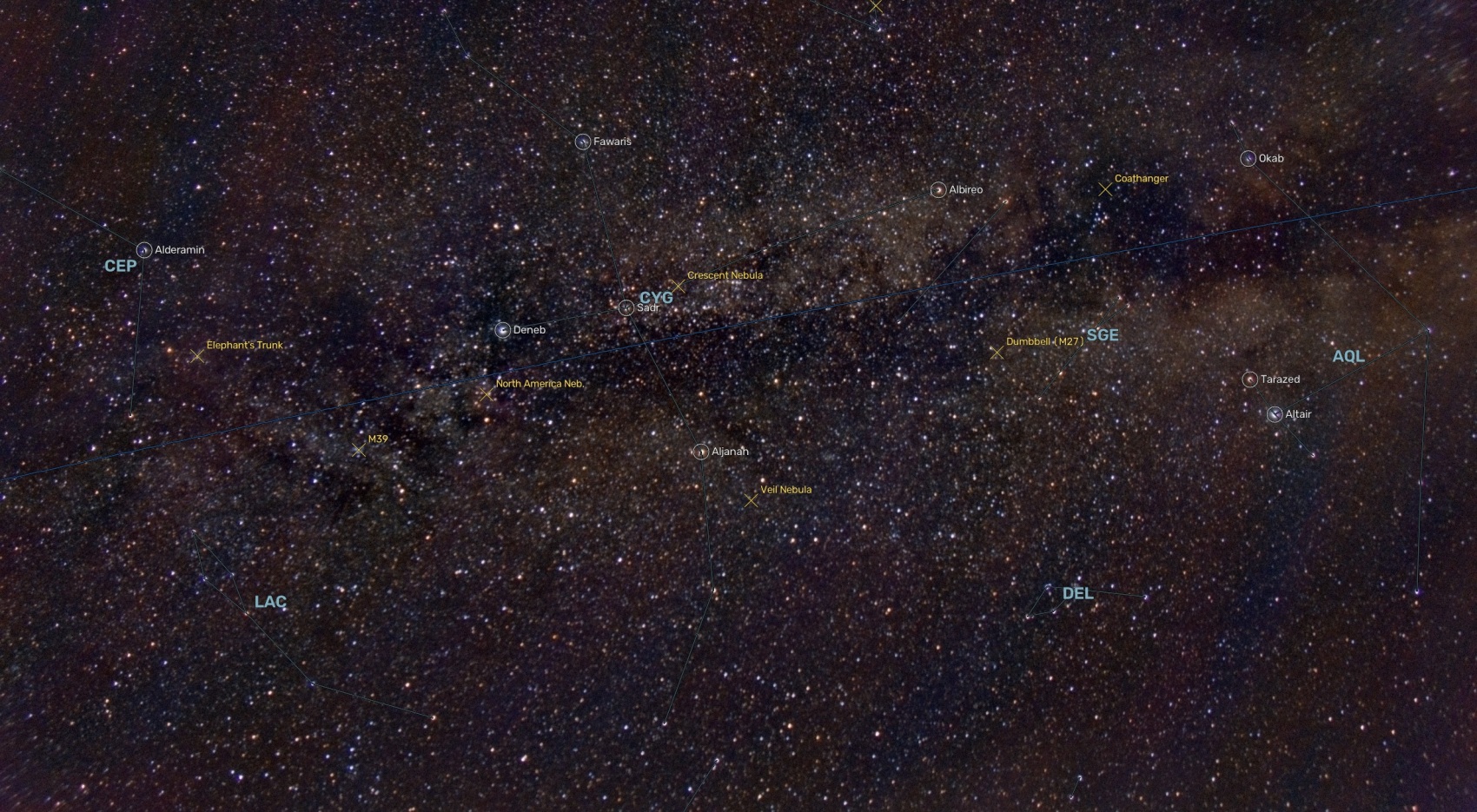
600 stars matched, 0.37 px residual
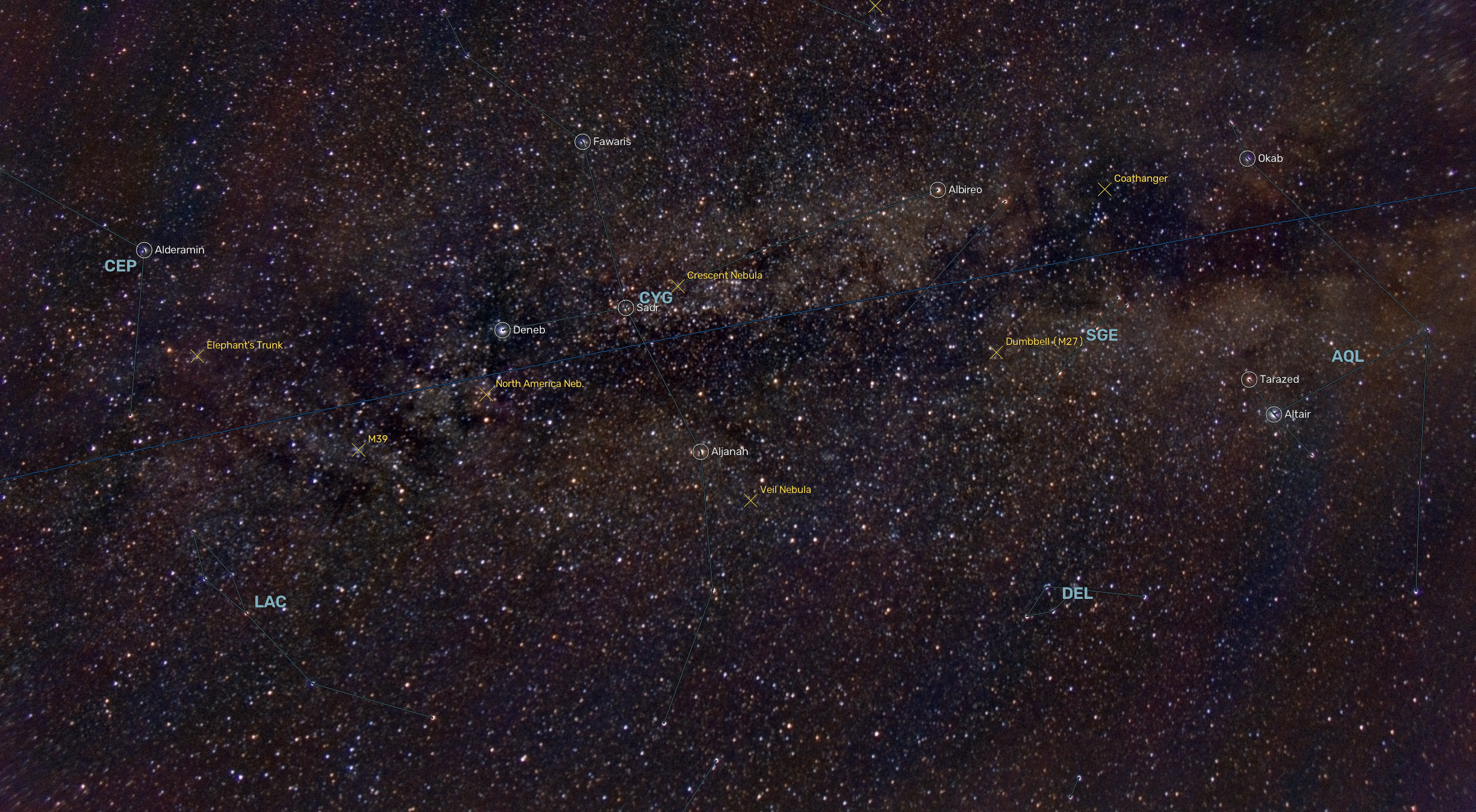
Named without being told anything
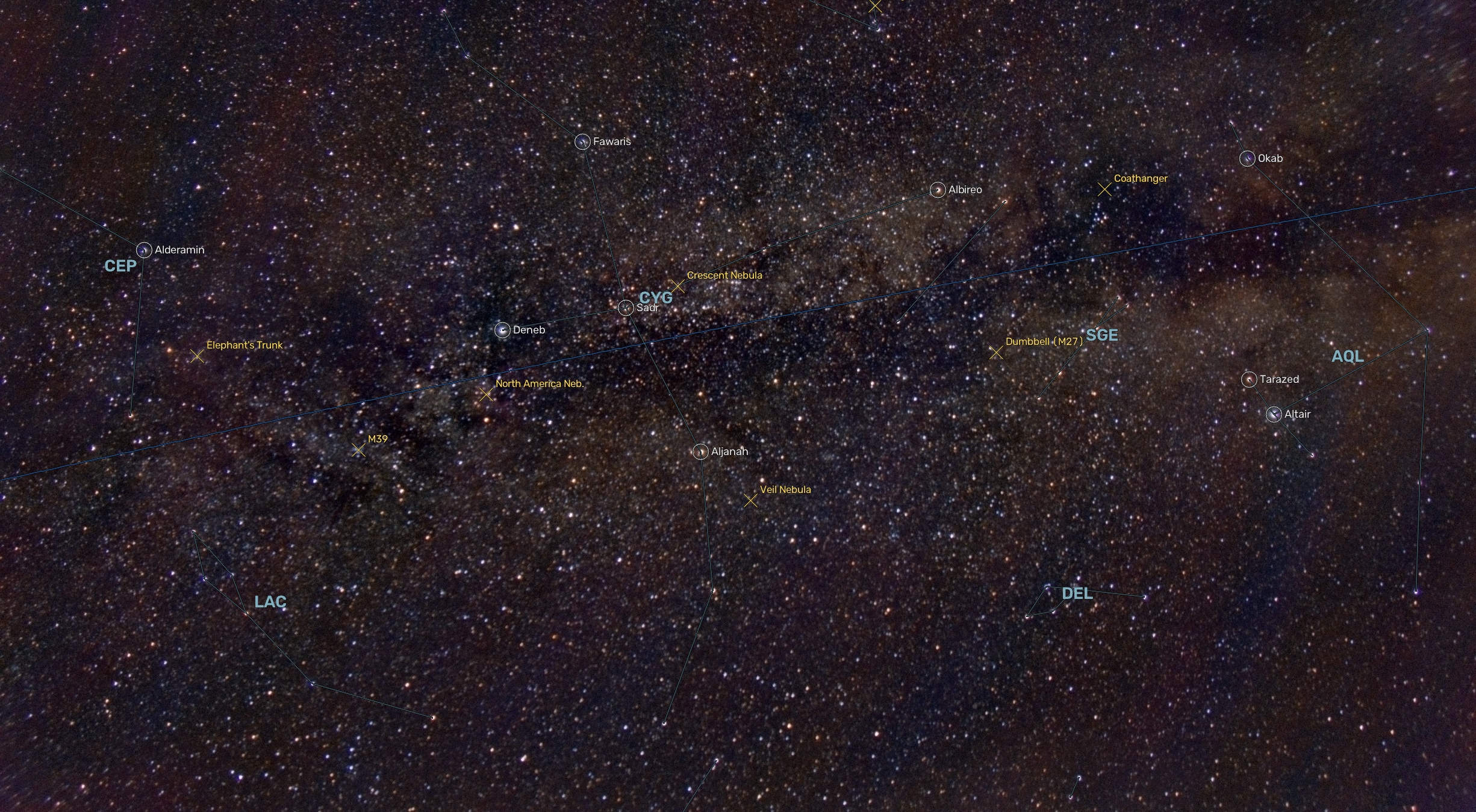
The first two nights were anchored by recognising the Pleiades by eye. That does not work on eighty degrees of southern Milky Way, so this one is solved against the catalogue instead: take the angle between two bright detections, look up every catalogued pair with the same separation, and test each candidate rotation against every other star in the field. A wrong pairing survives that test essentially never. The right one matched 600 stars to just over a third of a pixel.
It uses no clock and no location — which is the point, because it leaves both free to be checked afterwards rather than assumed. The blue line is the galactic equator, drawn from catalogue coordinates and never fitted to the picture. That it lies along the band is the evidence the background subtraction removed the sky and not the galaxy.
matched 600, residual 0.37 px
lens fitted here: f 1953 px, three radial terms
diagonal field 96°
assumed nothing — no time, no position
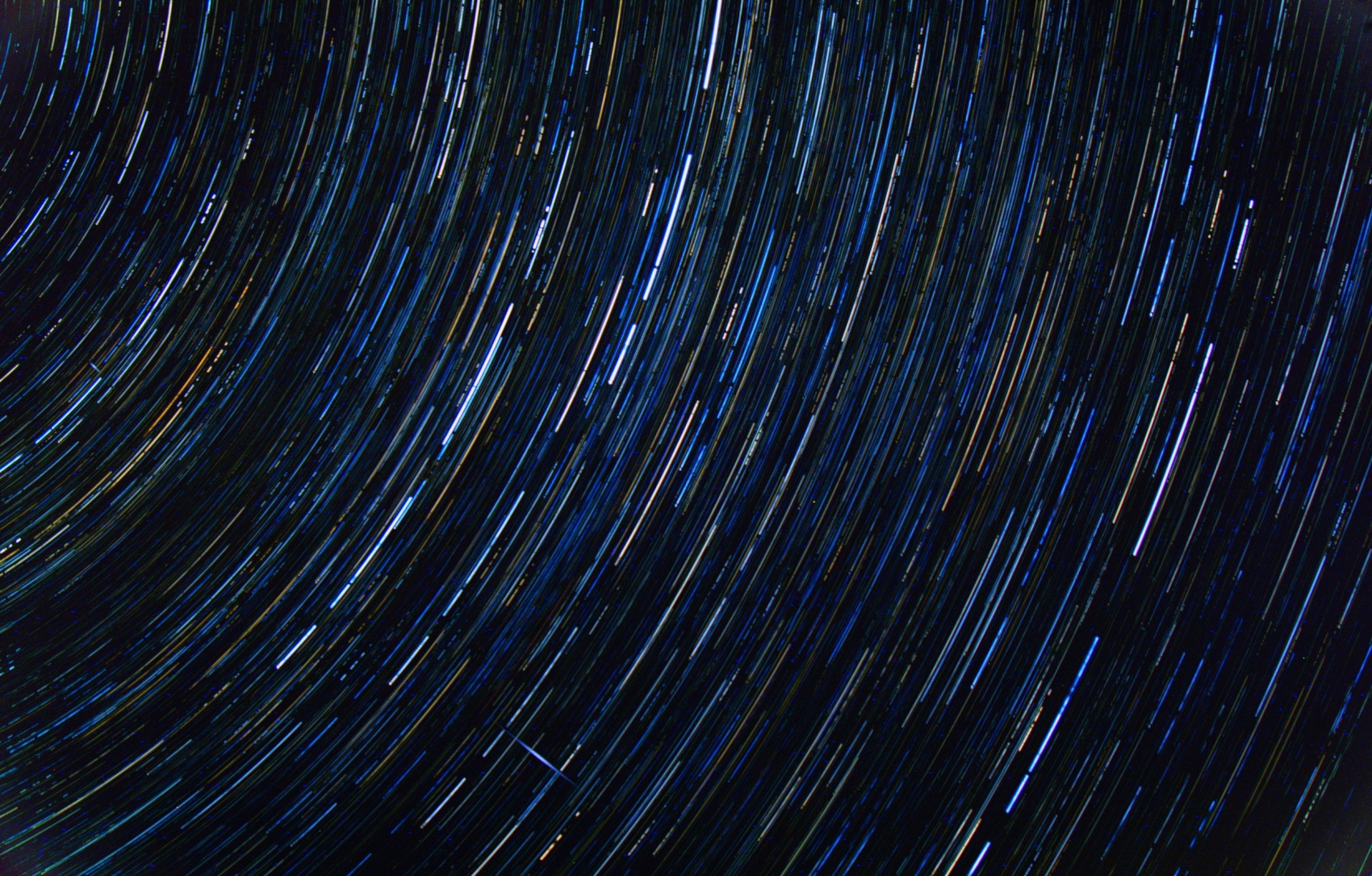
All 605 frames, unregistered
Forty-one degrees of the Earth turning
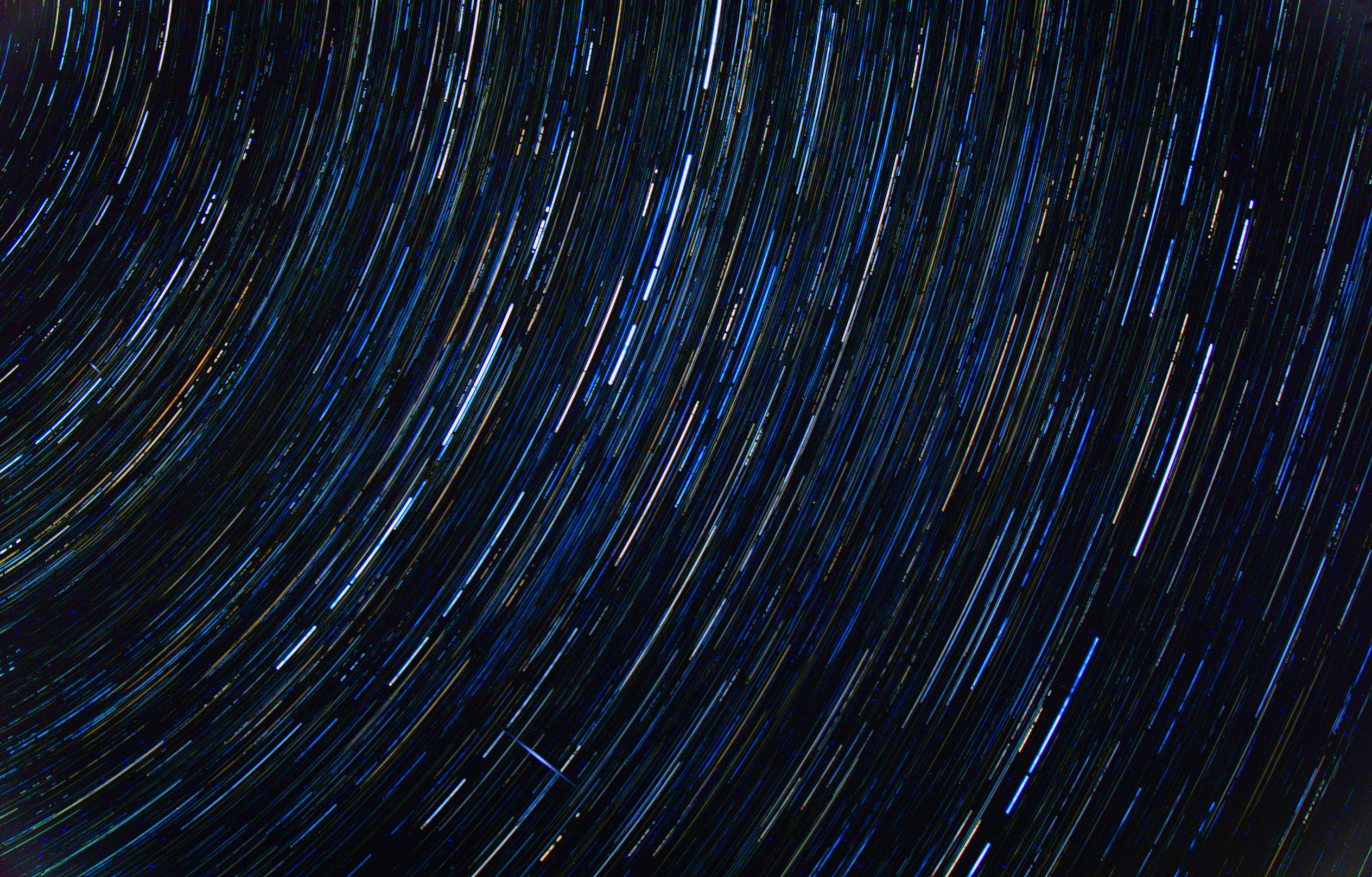
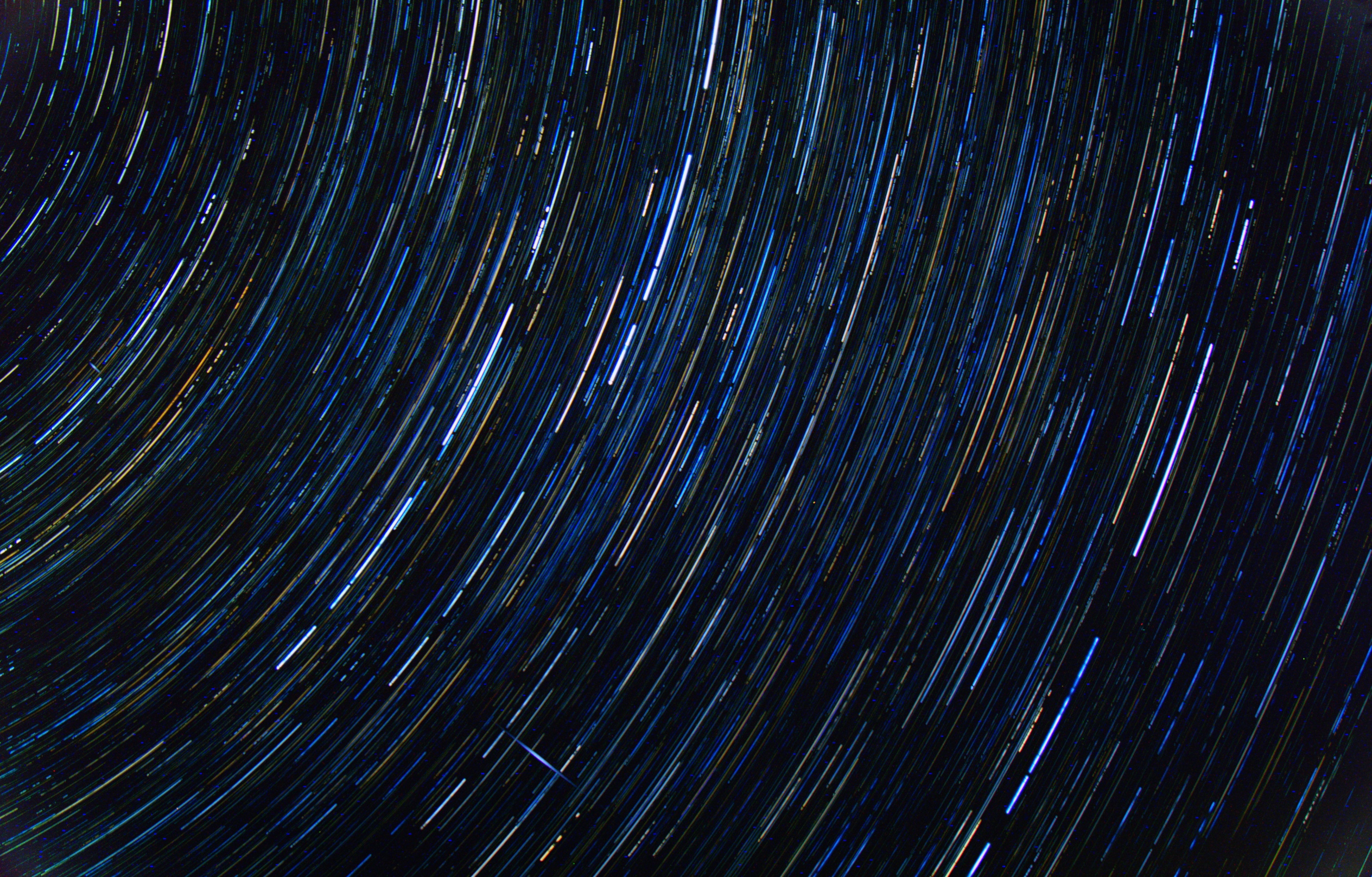
The whole night this time, cloud and all, so the arcs break where the sky closed over. The longest gap is twenty minutes.
A composite like this is only meaningful if the tripod never moved, so that was checked rather than assumed: solving the first and last frames of the night independently, the sky between them turns 41.553° about an axis 0.106° from the celestial pole, against 41.480° expected for a camera that stayed put. The small dashes within each arc are the 1.6 seconds the shutter was shut between exposures.
arc length 41.5° of rotation
span 2 h 46 m elapsed
breaks cloud, longest 20 min
tripod drift 0.11° over the night
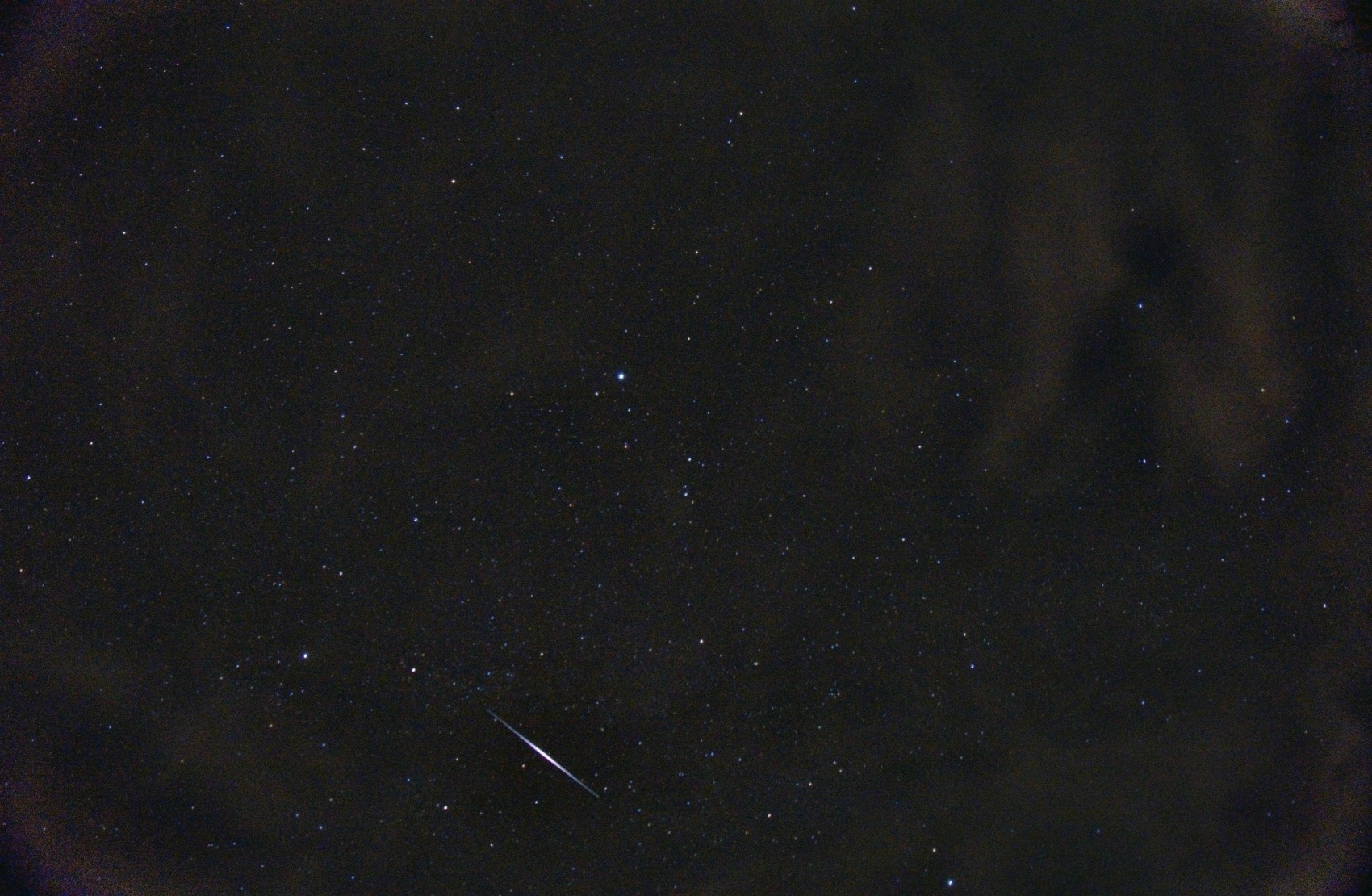
22:35:30, one frame
The thing that was not a meteor
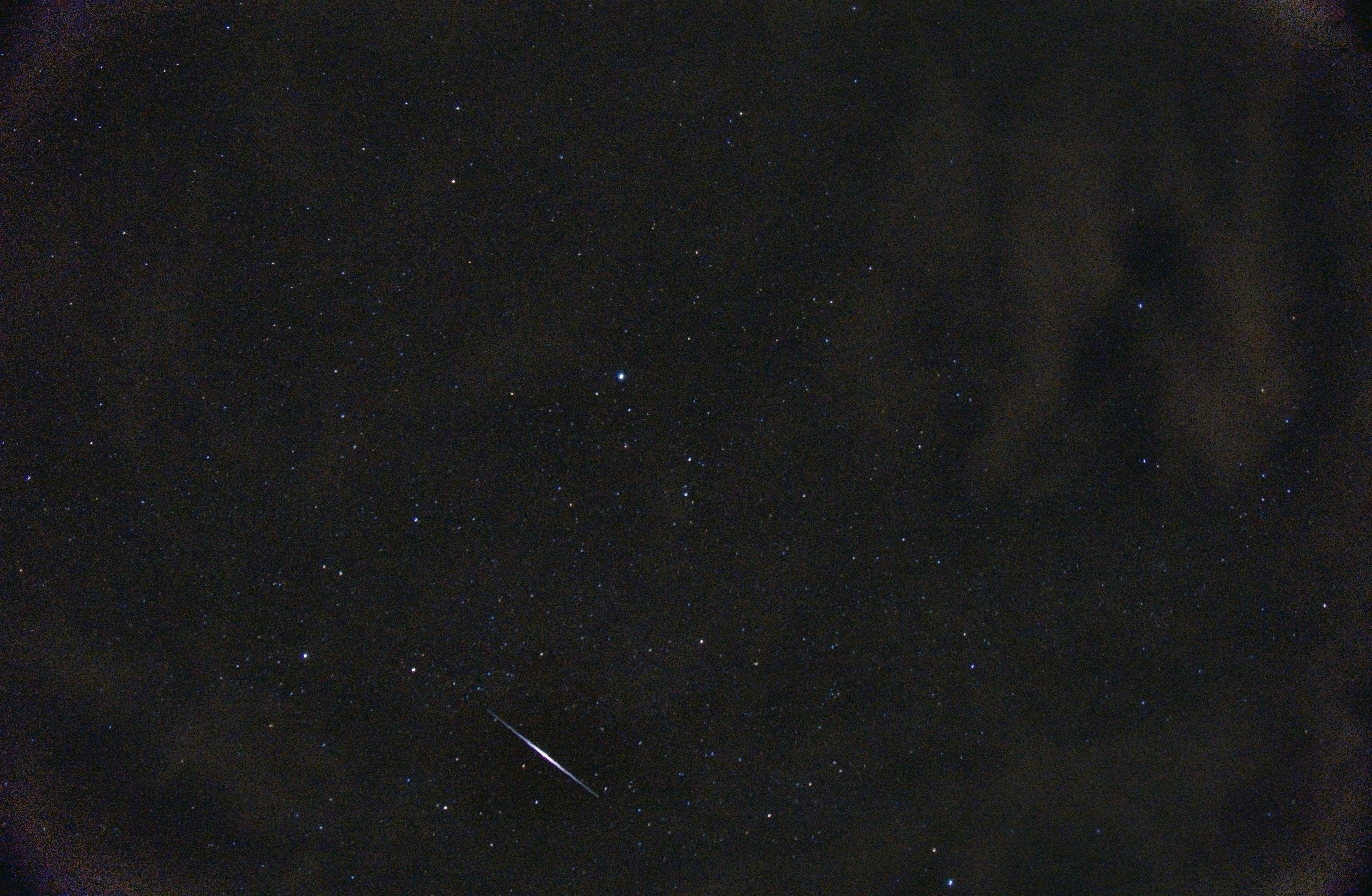
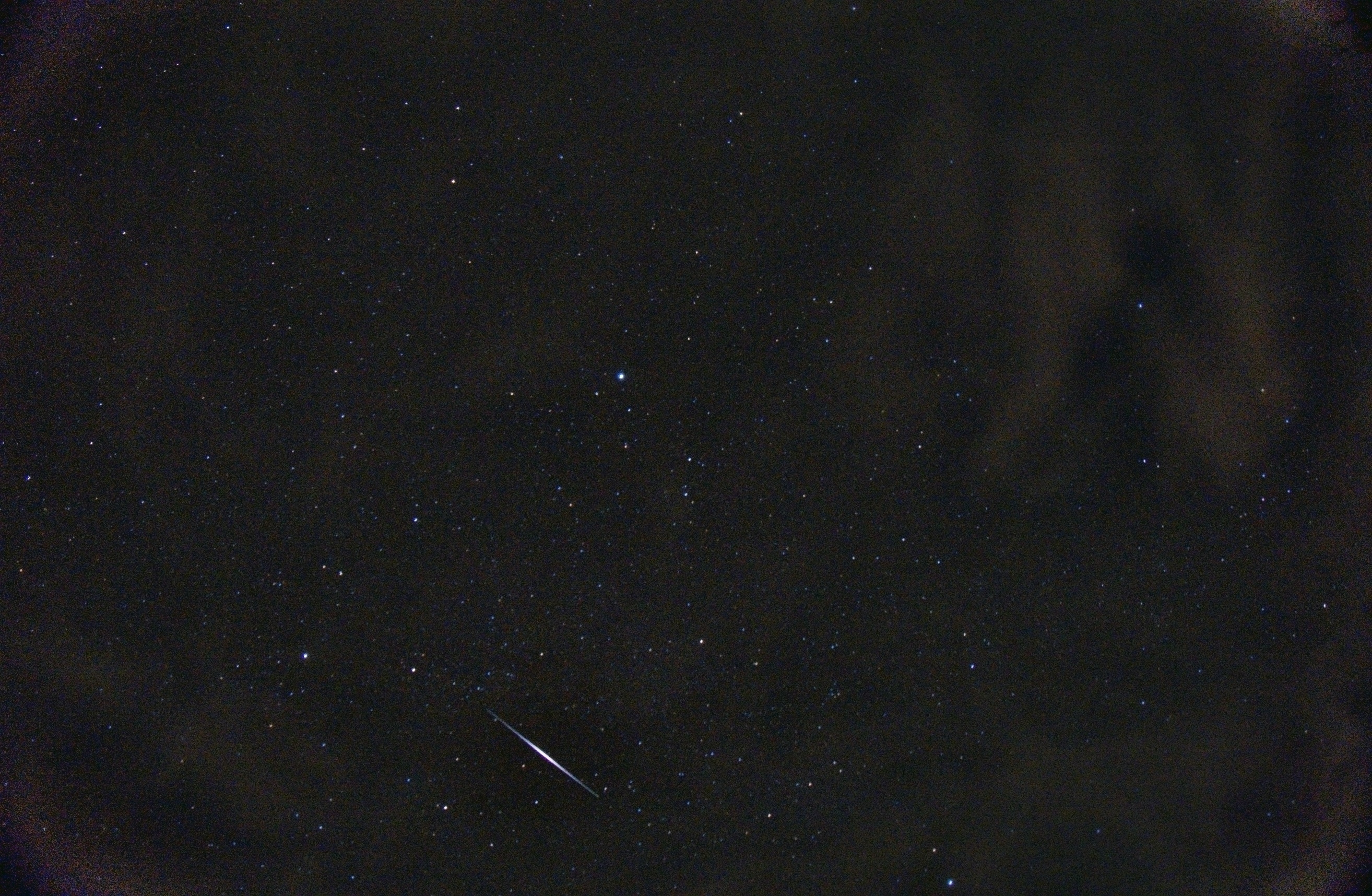
It looks exactly like a fireball: a tapered streak, faint at both ends and brilliant in the middle, nearly saturating the sensor at 63,931 of 65,535. It is a satellite catching the sun.
The frames either side settle it. The same object is there in both, faint, and the three streaks lie end to end along one straight line — the gaps between them falling exactly where the shutter was shut. A meteor is over in under a second and cannot span 48. As a persistent train it would have to be drifting at 477 m/s; the winds at that height run 50 to 100. Its measured 0.304°/s is instead precisely what a circular orbit at 1,350 km looks like passing overhead — and at 22:35 the Earth's shadow reached up to only 560 km, so an object that high was still in full sunlight. It flared again, more weakly, 66 seconds later.
trail 266 px, 7.8°
rate 0.304°/s → orbit at 1,350 km
sunlit floor 560 km at that hour
meteors that night none
605 frames at 24 per second
Two and three quarter hours of weather
Every frame of the night, including the 183 the stack throws away — built from the JPEG previews inside the raw files, which cost nothing to read and are already the right size for a 1080p film. A timelapse of only the clear frames would have edited out its own subject.
The bar along the bottom is the measured star count, dimmed on the frames that were too clouded to use. You can watch the sky open at midnight, hold for three quarters of an hour, and close again.
playback 24 fps, 25 s
built from embedded previews, 1616 px
cache used none
bar stars detected per frame
The other good bit
Why every satellite that night was a slow one
Nothing in these frames moves as fast as a satellite should. Every trail measured across the night sits between 0.08 and 0.19°/s, where a spacecraft at 550 km passing overhead would draw 0.79°/s. That is not the camera missing them. It is the Earth's shadow.
A satellite is only visible because it is in sunlight while the ground is not, and at local midnight in August from 37° north the Sun is 36° below the horizon. Geometry then puts everything below about 1,500 km inside the shadow, and what remains lit is high, and therefore slow. The limit moves through the night, and so does what the sky is allowed to contain:
| Local time | Sun below horizon | Lowest sunlit orbit | Longest possible trail |
|---|---|---|---|
| 22:30 | 23.2° | 562 km | 395 px |
| 23:30 | 31.3° | 1,088 km | 196 px |
| 00:20 | 36.2° | 1,524 km | 136 px |
| 01:16 | 38.9° | 1,818 km | 112 px |
Which is what makes the meteor search decidable. Anything longer than the limit for its own moment is moving faster than sunlight allows and has to be a meteor; anything shorter is a satellite. Run over all 605 frames, that finds twenty-three streaks, three of them appearing only once, and none beating its own limit. For a field covering 18.7% of the visible sky over 2.8 hours, the expected haul was 0.5 to 1.4 meteors, so nothing is exactly what the night owed us.
Originals
Everything, at full size
PNGs are 16-bit and unclipped, so they take an edit better than the JPEGs do. All of it is free to use however you like.
| File | What it is | Download |
|---|---|---|
| 01_cygnus_deep | Deep stack of Cygnus, 173 frames from the clear window | PNG 16-bit 17 MB JPEG 2 MB |
| 02_cygnus_labelled | The same frame with constellations, stars and nebulae named | PNG 16-bit 17 MB JPEG 2 MB |
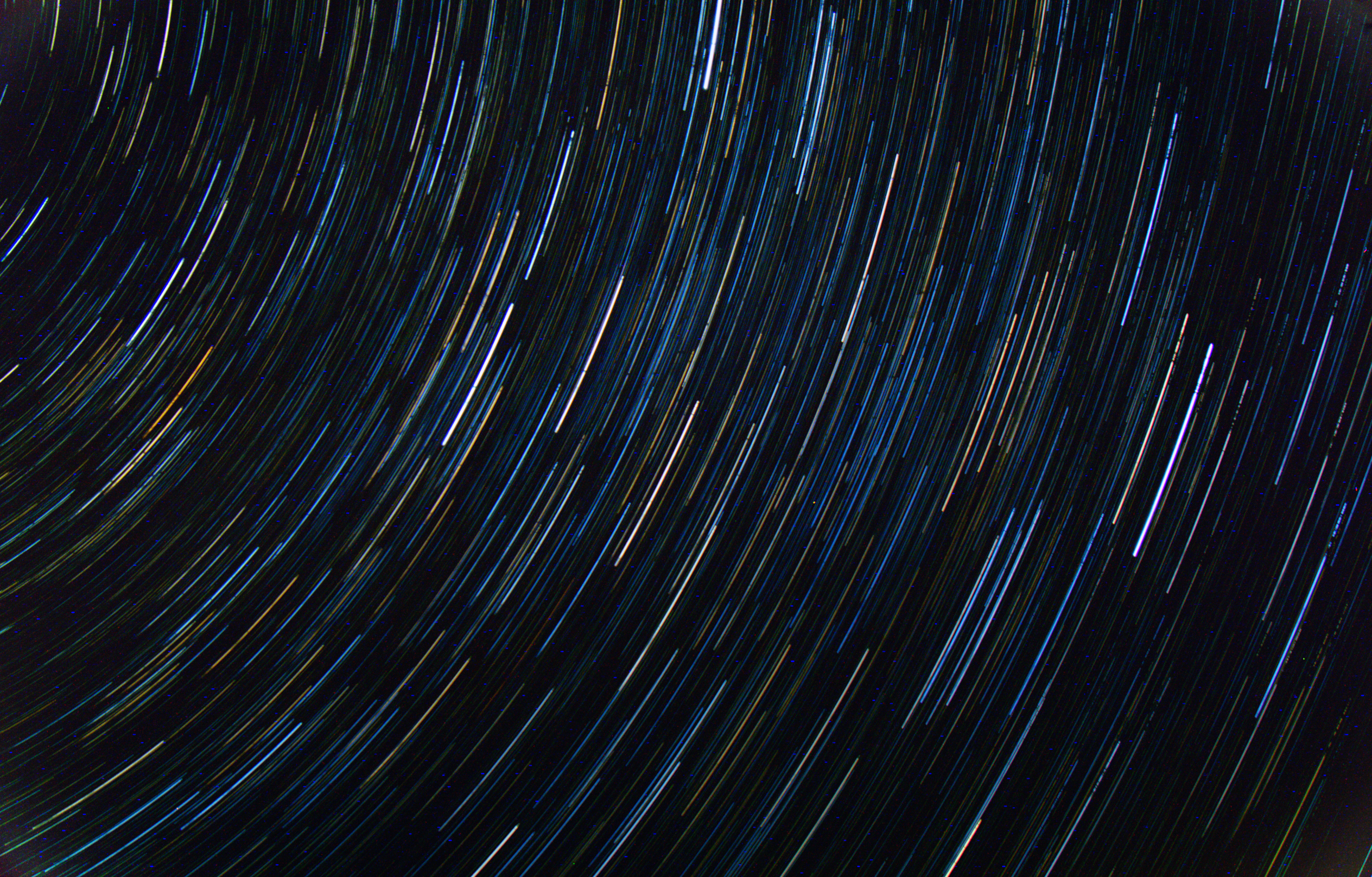
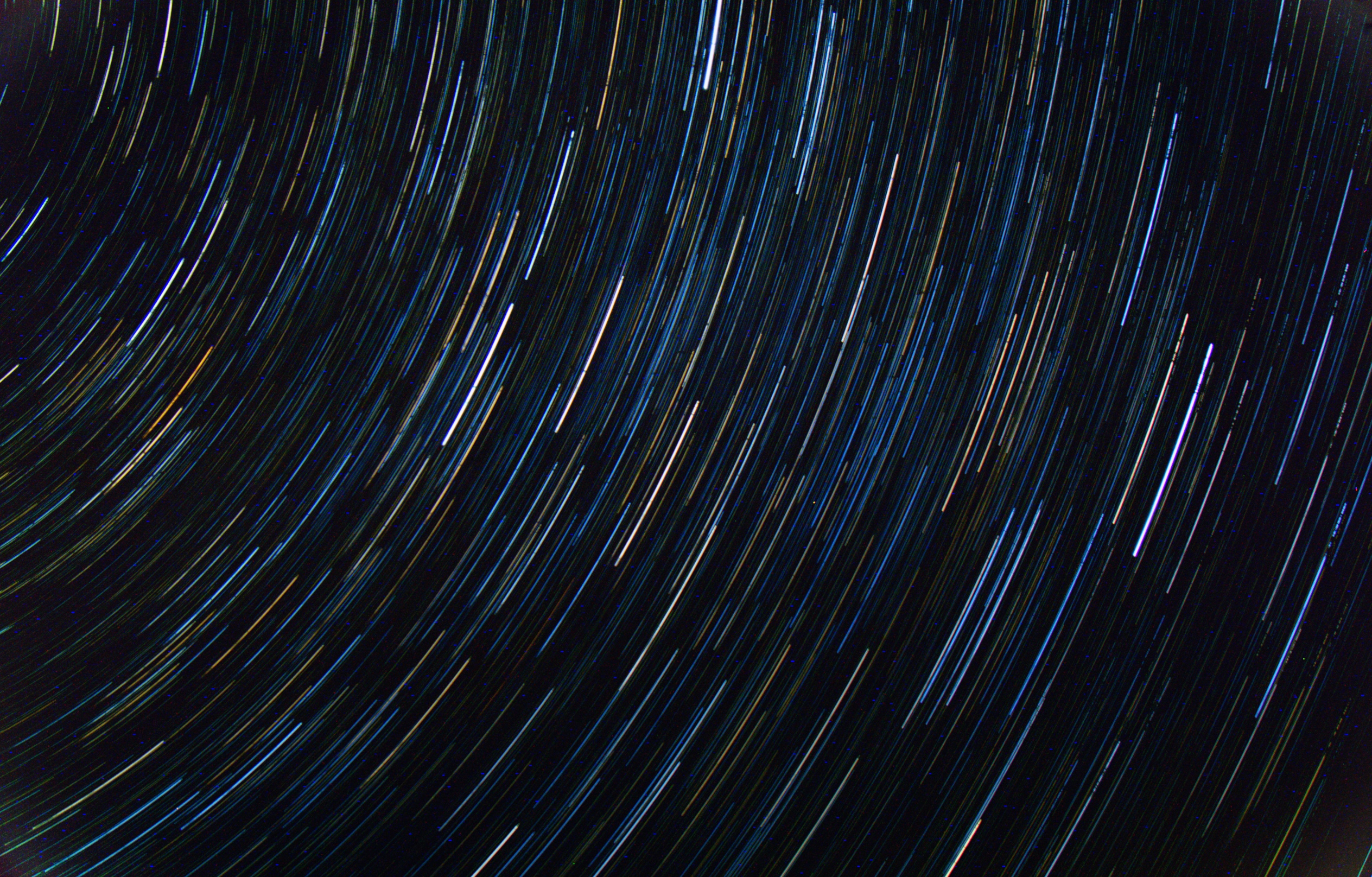
| 03_star_trails | Star trails over the clear window, 11.9 degrees of rotation | PNG 16-bit 22 MB JPEG 2 MB |
| 04_star_trails_night | Star trails over the whole night, 41.5 degrees, cloud gaps left in | PNG 16-bit 22 MB JPEG 2 MB |
| 05_satellite_flare_01_DSC06640 | The satellite flare, as a single 15-second frame | PNG 16-bit 24 MB JPEG 2 MB |
| 06_timelapse | Timelapse of the whole night, cloud and all — re-encoded to 1600 px to fit the host's 25 MiB cap | MP4 4 MB |